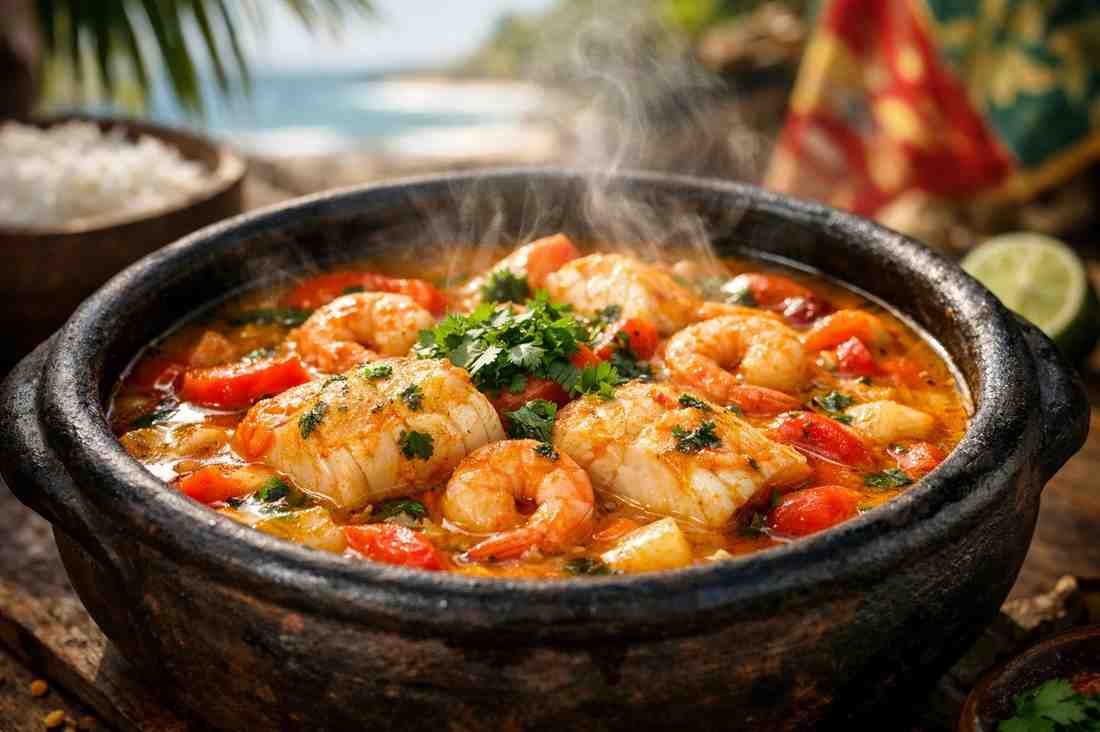
Among the world’s most vibrant culinary traditions, Brazilian cuisine stands out for its bold flavors, cultural diversity, and deep connection to regional ingredients. One dish that beautifully captures this essence is moqueca—a rich, fragrant seafood stew that tells a story of history, geography, and cultural fusion.
Moqueca is more than just a meal; it is an experience. From the sizzling clay pot it’s cooked in to the intoxicating aroma of coconut milk, herbs, and spices, this dish embodies the soul of coastal Brazil.
The Origins of Moqueca
Moqueca dates back centuries and has its roots in Indigenous Brazilian cooking techniques. The word itself is believed to come from the Tupi language, referring to a method of slow-cooking food. Over time, African and Portuguese influences shaped the dish into what we recognize today.
As Brazil’s coastal regions developed, moqueca became especially popular in two states: Bahia and Espírito Santo. Each region created its own distinct version, resulting in a friendly culinary rivalry that continues today.
The Two Iconic Styles
Moqueca Baiana (Bahia Style)
This is perhaps the more internationally recognized version. It reflects strong African influences and is known for its rich, bold flavors.
Key characteristics include:
- Coconut milk for creaminess
- Palm oil (dendê) for its distinctive color and flavor
- Bell peppers, onions, tomatoes, garlic, and cilantro
- A vibrant, slightly spicy profile
The result is a colorful, aromatic stew that is both hearty and deeply satisfying.
Moqueca Capixaba (Espírito Santo Style)
This version is lighter and more subtle, highlighting the natural flavors of the seafood.
Key characteristics include:
- No coconut milk or palm oil
- Use of olive oil instead
- Fresh herbs like parsley and chives
- A cleaner, more delicate taste
It is typically cooked in traditional black clay pots, which enhance both flavor and presentation.
The Essential Ingredients
While variations exist, moqueca generally includes a harmonious blend of ingredients:
Seafood
Fish is the most common choice, often firm white varieties that hold their shape during cooking. Shrimp, squid, or a mix of seafood may also be used.
Aromatics
Onions, garlic, tomatoes, and peppers form the flavorful base of the dish.
Herbs and Spices
Fresh cilantro, lime juice, and occasionally chili peppers add brightness and depth.
Coconut Milk (Baiana version)
This ingredient gives the dish its signature richness and slightly sweet undertone.
Palm Oil (Dendê)
A defining feature of the Bahian version, palm oil contributes a unique flavor and vibrant orange hue.
Cooking Method: A Ritual in Itself
Moqueca is traditionally cooked slowly in a clay pot, allowing the ingredients to meld together gently. Unlike many stews, it is rarely stirred. Instead, the pot is shaken occasionally to prevent sticking and to preserve the integrity of the ingredients.
This method ensures that the seafood remains tender while the flavors develop fully. The cooking process itself becomes part of the experience, often shared among family and friends.
Serving and Pairings
Moqueca is typically served hot, straight from the pot, accompanied by:
- White rice
- Farofa (toasted cassava flour)
- Pirão (a thick paste made from fish broth and cassava flour)
These sides complement the stew, balancing its richness and adding texture to the meal.
Cultural Significance
Moqueca is deeply tied to Brazil’s cultural identity, especially in coastal communities. It reflects the blending of Indigenous, African, and European traditions—a hallmark of Brazilian culture.
In Bahia, the dish is often associated with celebration and community gatherings, while in Espírito Santo, it represents regional pride and culinary heritage.
Modern Interpretations
As Brazilian cuisine gains international recognition, chefs around the world have begun experimenting with moqueca. Some modern variations include vegetarian versions, fusion adaptations, and fine-dining presentations.
Despite these innovations, traditional moqueca remains beloved for its authenticity and comforting qualities.
Health and Nutrition
Moqueca can be both indulgent and nutritious, depending on the preparation. Rich in protein from seafood and packed with vitamins from fresh vegetables, it offers a balanced meal.
However, the use of coconut milk and palm oil can increase calorie content, so lighter versions are sometimes preferred for everyday consumption.
The Global Appeal of Moqueca
What makes moqueca truly special is its ability to transport you. With each bite, you can almost feel the ocean breeze and hear the rhythms of Brazilian culture.
As global interest in diverse cuisines continues to grow, moqueca stands out as a dish that offers both authenticity and adaptability.
Conclusion
Moqueca is a celebration of flavor, history, and culture. From its Indigenous roots to its modern interpretations, it remains one of Brazil’s most iconic dishes.
Whether you enjoy the bold richness of Moqueca Baiana or the delicate simplicity of Moqueca Capixaba, one thing is certain: this dish is more than just food—it’s a story served in a pot.