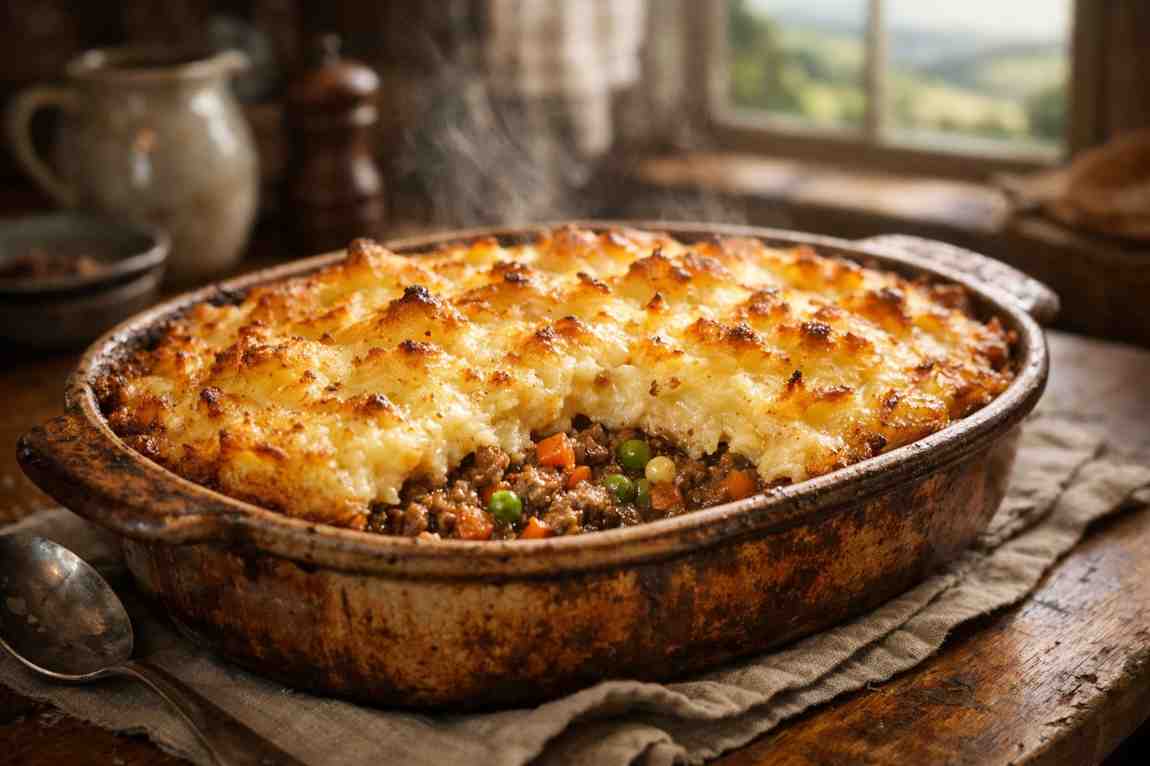
Few comfort foods feel as timeless and satisfying as Shepherd’s Pie. Warm, hearty, and deeply flavorful, this traditional dish has earned its place as a staple in home kitchens across the world. Built on simple ingredients yet rich in history, Shepherd’s Pie reflects the essence of rustic cooking—making something extraordinary from humble beginnings.
The Origins of Shepherd’s Pie
The story of Shepherd’s Pie begins in the rural kitchens of the United Kingdom and Ireland, where resourcefulness was essential. It emerged in the late 18th or early 19th century as a way to use leftover roasted meat, especially lamb or mutton.
Traditionally, the dish was created by layering cooked minced meat in a baking dish and topping it with mashed potatoes. Once baked, it formed a golden, crispy crust over a savory filling. It was filling, affordable, and perfect for feeding large families.
In essence, Shepherd’s Pie is a dish born out of practicality—but elevated over time into a beloved classic.
Shepherd’s Pie vs. Cottage Pie
One of the most common points of confusion is the difference between Shepherd’s Pie and Cottage Pie.
- Shepherd’s Pie uses lamb (the word “shepherd” refers to sheep herders).
- Cottage Pie uses beef instead.
Although the terms are often used interchangeably today, traditional cooks still make this distinction. Both dishes follow the same structure: a rich meat filling topped with creamy mashed potatoes.
Core Components of Shepherd’s Pie
1. The Meat Filling
The base is typically made from minced lamb cooked with onions, garlic, and vegetables such as carrots and peas. The mixture is often simmered in a savory gravy made with stock and herbs like thyme or rosemary.
This layer delivers the deep, savory foundation of the dish.
2. The Vegetables
Traditional recipes include peas, carrots, and sometimes celery. These vegetables add sweetness, texture, and balance to the rich meat filling.
3. The Mashed Potato Topping
The defining feature of Shepherd’s Pie is its creamy mashed potato layer. Made with butter, milk, and seasoning, the mashed potatoes are spread over the filling and sometimes textured with a fork to create crispy peaks when baked.
4. The Golden Crust
When baked in the oven, the top layer becomes golden and slightly crisp, contrasting beautifully with the soft filling beneath.
A Dish of the British Isles
Shepherd’s Pie is closely associated with the United Kingdom and Ireland. These regions have long histories of pastoral farming, especially sheep herding, which explains the dish’s reliance on lamb.
Over time, it became a staple of working-class cuisine—simple, filling, and made from ingredients that were readily available in rural households.
Why Shepherd’s Pie Endures
The lasting popularity of Shepherd’s Pie can be attributed to its perfect balance of comfort and practicality. It is:
- Nutritious – combining protein, vegetables, and carbohydrates
- Affordable – traditionally made with leftover ingredients
- Filling – ideal for cold climates and large families
- Versatile – adaptable to modern tastes and dietary needs
It’s a dish that feels both nostalgic and timeless.
Modern Variations
Vegetarian Shepherd’s Pie
Lentils, mushrooms, or plant-based substitutes replace lamb for a hearty vegetarian version.
Gourmet Versions
Chefs enhance the dish with truffle oil, sweet potato mash, or gourmet cheeses.
Global Twists
Modern adaptations include spiced versions, turkey or chicken variations, and fusion-inspired fillings.
Shepherd’s Pie in Modern Food Culture
Today, Shepherd’s Pie is a symbol of comfort food worldwide. It appears on restaurant menus, in frozen meals, and in home kitchens.
Its emotional appeal lies in its connection to home, warmth, and simplicity.
Health Considerations
While rich and hearty, Shepherd’s Pie can be high in calories due to butter and potatoes. Lighter versions may include:
- Lean lamb or plant-based protein
- Extra vegetables
- Cauliflower mash instead of potatoes
- Reduced butter and cream
The Cultural Legacy of Shepherd’s Pie
Shepherd’s Pie reflects centuries of rural cooking traditions, where nothing was wasted and everything had purpose. From farm kitchens to modern restaurants, it has remained a beloved classic.
It continues to represent United Kingdom culinary heritage while being embraced globally as a universal comfort food.
Conclusion
Shepherd’s Pie is more than a baked dish of meat and potatoes—it is a piece of culinary history. Rooted in tradition yet adaptable to modern tastes, it continues to comfort generations worldwide.
Whether enjoyed traditionally or reinvented, it remains a reminder that simple ingredients often create the most enduring meals.