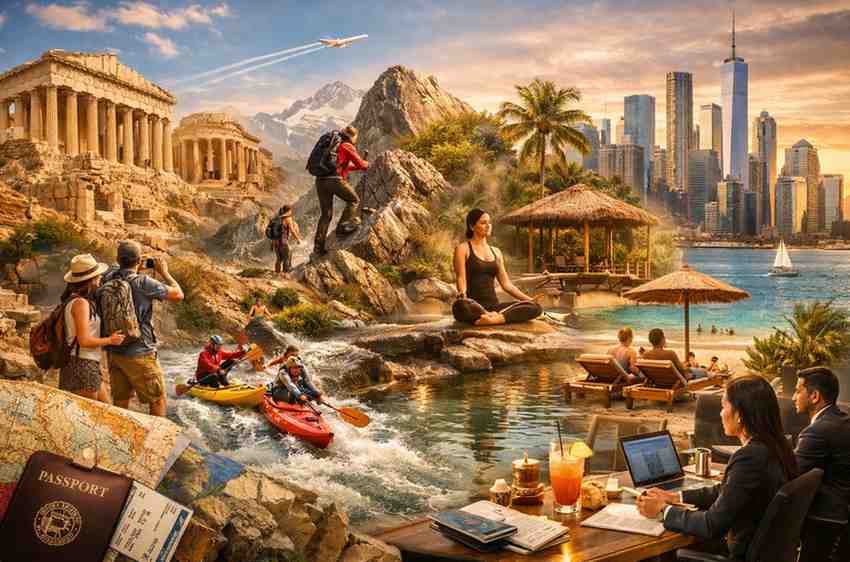
Tourism is one of the largest and most dynamic industries in the world. Every year, billions of people travel for leisure, business, culture, adventure, education, and more. But tourism is not just one single activity—it is a broad system made up of many different types of tourism, each shaped by purpose, experience, and destination.
Understanding tourism types helps explain how people travel, why they travel, and how destinations develop to meet different needs.
What is Tourism?
Tourism refers to the movement of people from their usual place of residence to other locations for a short-term stay, typically for leisure, business, or personal purposes. The tourism industry includes transportation, accommodation, attractions, food services, and travel planning.
A key global organization involved in defining and supporting tourism development is the United Nations World Tourism Organization.
Tourism is not just travel—it is an economic, cultural, and social force that connects countries and people.
1. Domestic Tourism
Domestic tourism refers to travel within one’s own country. It is the most common form of tourism worldwide.
Example: Traveling from Delhi to Goa within India.
- No international borders involved
- Lower cost compared to international travel
- Easier planning and fewer legal requirements
- Supports local economies
2. International Tourism
International tourism involves traveling to another country, requiring passports, visas, and planning.
- Crossing national borders
- Currency exchange
- Exposure to different cultures
- Higher costs but richer experiences
Popular destinations include France, Japan, and Italy.
3. Leisure Tourism
Leisure tourism focuses on relaxation and enjoyment.
- Beach vacations
- Resort stays
- Sightseeing
- Cruises
4. Adventure Tourism
Adventure tourism involves physical activity and exploration.
- Hiking and trekking
- Scuba diving
- Paragliding
- Rock climbing
5. Cultural Tourism
Cultural tourism focuses on history, traditions, and heritage.
- Museums and monuments
- Historical sites
- Festivals and events
- Local cuisine and traditions
Cities like Paris and Kyoto are major cultural tourism hubs.
6. Ecotourism
Ecotourism promotes responsible travel to natural areas while conserving the environment.
- Environmental protection
- Wildlife conservation
- Support for local communities
- Sustainable travel practices
7. Business Tourism
Business tourism involves work-related travel such as conferences and meetings.
- Corporate meetings
- Trade fairs
- International conferences
- Training programs
Major business hubs include New York, London, and Singapore.
8. Medical Tourism
Medical tourism involves traveling for medical treatment.
- Lower treatment costs
- Specialized healthcare
- Shorter waiting times
Countries like Thailand and India are popular destinations.
9. Religious Tourism
Religious tourism includes travel for spiritual purposes.
- Pilgrimages
- Temple visits
- Religious festivals
Important destinations include Varanasi, Mecca, and Vatican City.
10. Sustainable Tourism
Sustainable tourism minimizes environmental and cultural impact while supporting local communities.
- Reducing pollution
- Supporting local businesses
- Protecting heritage
- Responsible travel behavior
Emerging Types of Tourism
Digital Nomad Tourism
Remote work while traveling across countries.
Space Tourism
Future travel beyond Earth.
Experiential Tourism
Immersive activities like cooking or farming experiences.
Wellness Tourism
Travel focused on health, yoga, and relaxation.
Importance of Tourism Types
- Helps governments plan infrastructure
- Guides business strategies
- Improves traveler experiences
- Supports sustainable development
Conclusion
Tourism is a powerful global system that connects people, cultures, and economies. Each type of tourism serves a unique purpose, from leisure and adventure to business and sustainability.
Ultimately, tourism is not just about travel—it is about discovery, connection, and understanding across borders.